Buy mentorcoaching.eu ?
We are moving the project
mentorcoaching.eu .
Are you interested in purchasing the domain
mentorcoaching.eu ?
domain@kv-gmbh.de · 0541-91531010
Buy mentorcoaching.eu ?
What are similarity ratios?
Similarity ratios are ratios that compare the corresponding sides of two similar figures. They help us understand the relationship between the sides of similar shapes. The ratio of corresponding sides in similar figures is always the same, which means that if you know the ratio of one pair of sides, you can use it to find the ratio of other pairs of sides. Similarity ratios are important in geometry and are used to solve problems involving similar figures. **
What is the difference between similarity theorem 1 and similarity theorem 2?
Similarity theorem 1, also known as the Angle-Angle (AA) similarity theorem, states that if two angles of one triangle are congruent to two angles of another triangle, then the triangles are similar. On the other hand, similarity theorem 2, also known as the Side-Angle-Side (SAS) similarity theorem, states that if two sides of one triangle are proportional to two sides of another triangle and the included angles are congruent, then the triangles are similar. The main difference between the two theorems is the criteria for establishing similarity - AA theorem focuses on angle congruence, while SAS theorem focuses on both side proportionality and angle congruence. **

Similar search terms for Similarity
Top-Angebote
Products related to Similarity:
-
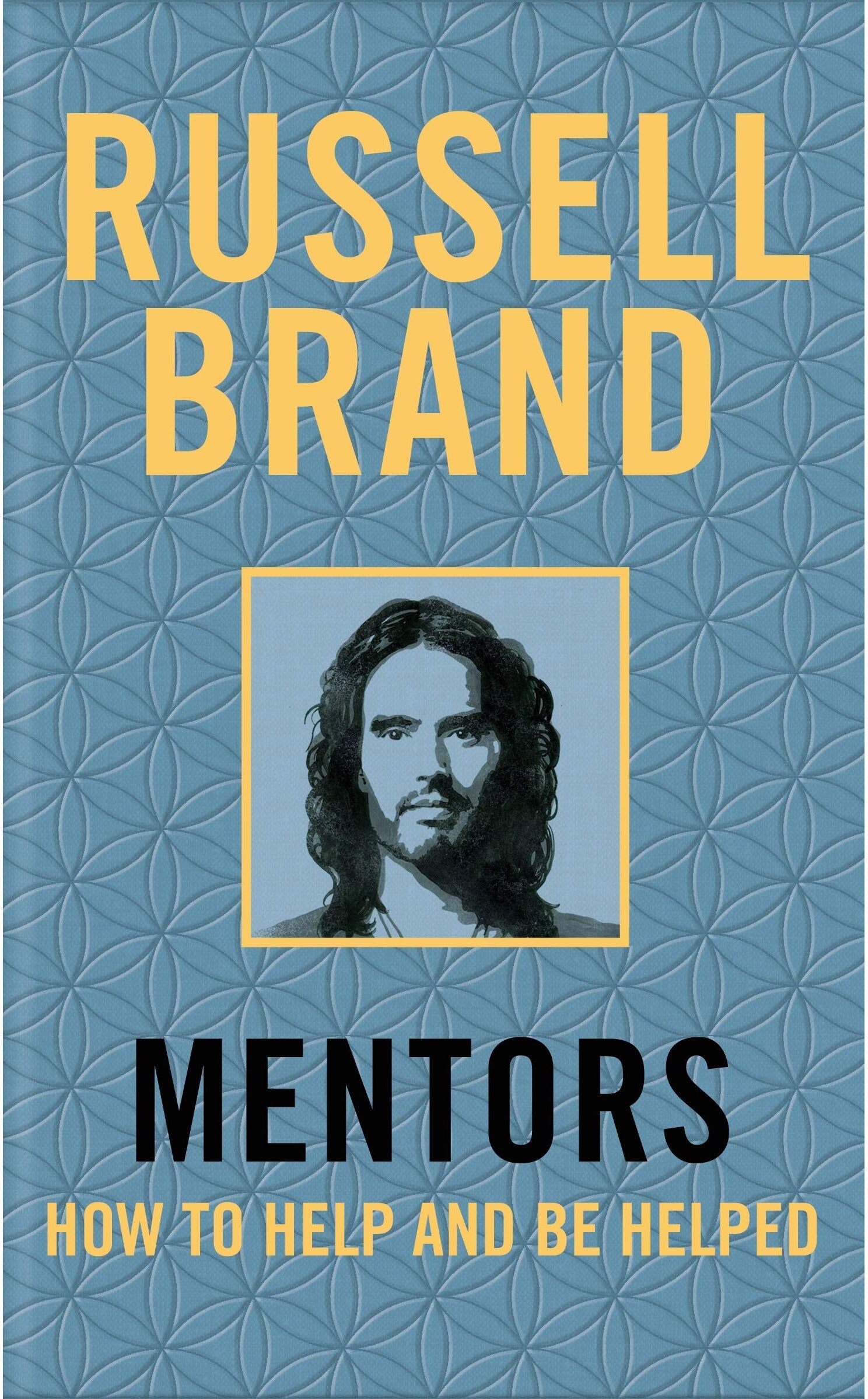
Bluebird Mentors: How to Help and Be Helped by Russell Brand – Personal Growth & Guidance BookRussell Brand Mentors How to Help and Be Helped ‘I have mentors in every area of my life, as a comic, a dad, a recovering drug addict, a spiritual being and as a man who believes that we, as individuals and the great globe itself, are works in progress and that through a chain of mentorship we can improve individually and globally, together . . . One of the unexpected advantages my drug addiction granted is that the process of recovery that I practise includes a mentorship tradition. I will encourage you to find mentors of your own and explain how you may better use the ones you already have. Furthermore, I will tell you about my experiences mentoring others and how invaluable that has been on my ongoing journey to self-acceptance and how it has helped me to transform from a bewildered and volatile vagabond to a (mostly) present and (usually) focussed husband and father.’ – Russell Brand Mentors: How to Help and Be Helped describes the impact that a series of significant people have had on the author – from the wayward youths he tried to emulate growing up in Essex, through the first ex-junkie stage, to the people he turns to today to help him be a better father. It explores how we all – consciously and unconsciously – choose guides, mentors and heroes throughout our lives and examines the new perspectives they can bring.1,99 £*Shipping: 1,99 £Secure redirect to the provider
-
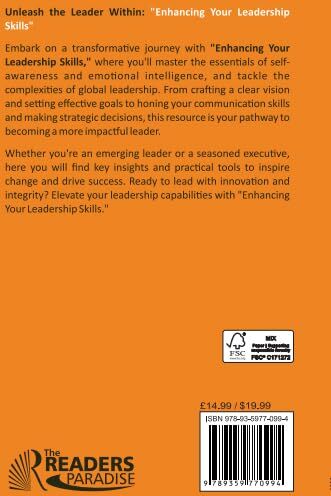
The Readers Paradise Enhancing Your Leadership Skills: A Practical Handbook for Success by Prof. V.K.Simon - Non Fiction Paperback - Leadership & Professional DevelopmentEnhance your leadership skills with this practical handbook by Prof. V.K.Simon. Written for anyone looking to lead with confidence and clarity, it blends self-awareness, emotional intelligence, and real-world strategy to help you achieve success. Whether you're a first-time manager or a seasoned executive, this compact guide delivers tools to strengthen decision-making, communication, and team impact in a fast-changing global workplace. It's built around the idea that great leadership is learned through practice, not theory alone, and covers the core competencies every effective leader needs, starting with self-awareness and emotional intelligence.2,99 £*Shipping: 2,99 £Secure redirect to the provider
-
Robin Sharma 3-Book Collection Set by Robin Sharma - Leadership & Personal Growth - Non Fiction - PaperbackTitles in This Set:. The Leader Who Had No Title:A Modern Fable on Real Success in Business and in Life. The Saint the Surfer and the Ceo. The Secret Letters of the Monk Who Sold His Ferrari Condition: BRAND NEW. Format: Paperback. ISBN: Overview:. Discover a powerful trio of Robin Sharma’s most enduring leadership parables in one compact, ready-to-read collection. The Leader Who Had No Title presents a modern fable about real success that transcends rank, showing readers that true leadership is earned through daily habits, service, and a clear sense of purpose. The Saint the Surfer and the Ceo follows a transformative journey in which a seeker encounters three distinct teachers—each embodying a different path to fulfilment—and learns how to align heart and ambition in a busy, results-driven world. The Secret Letters of the Monk Who Sold His Ferrari gathers intimate letters offering practical wisdom for happiness, resilience, and authentic living. Together, these three paperback titles form a cohesive program for personal and professional growth, designed for busy professionals, aspiring leaders, students of self-improvement, and anyone seeking to elevate their daily life. The brand-new editions are portable, gift-ready, and built to inspire daily action on the road to higher achievement. What Makes This Collection Special:. This set is more than a bookmarkable trio; it’s a guided reading journey that builds a practical leadership toolkit across three distinct lenses. The Leader Who Had No Title introduces core principles of influence without formal authority, while The Saint the Surfer and the Ceo expands those ideas through memorable archetypes and universal truths about purpose-driven work. The Secret Letters of the Monk Who Sold His Ferrari distills those insights into bite-sized, reflective letters you can return to again and again. The result is a binge-worthy, portable library that reinforces consistent values—clarity, discipline, service, and fulfilment—across business and life. It’s an ideal gift for collaborators, graduates, or anyone ready to turn inspiration into tangible, everyday impact. Books Included in This Collection:. The Leader Who Had No Title:A Modern Fable on Real Success in Business and in Life. Blending storytelling with practical wisdom, this modern fable invites readers to question leadership as a title and embrace leadership as daily practice. Through a narrative about a reluctant employee who learns from mentors, the book distills actionable habits—communication, courage, accountability, and generosity—that elevate performance and character in the workplace and at home. It’s accessible, motivating, and designed for busy readers seeking a clear path from idea to action. Expect crisp chapters, memorable parables, and principles you can apply immediately to improve teamwork, decision-making, and personal momentum. The Saint the Surfer and the Ceo. Across continents and cultures, this book leads you through a journey of...22,99 £*Shipping: 2,99 £Secure redirect to the provider


-
How can the similarity factor for determining the similarity of triangles be calculated?
The similarity factor for determining the similarity of triangles can be calculated by comparing the corresponding sides of the two triangles. If the ratio of the lengths of the corresponding sides of the two triangles is the same, then the triangles are similar. This ratio can be calculated by dividing the length of one side of a triangle by the length of the corresponding side of the other triangle. If all three ratios of corresponding sides are equal, then the triangles are similar. This is known as the similarity factor and is used to determine the similarity of triangles. **
-
How can one calculate the similarity factor to determine the similarity of triangles?
The similarity factor can be calculated by comparing the corresponding sides of two triangles. To do this, one can divide the length of one side of the first triangle by the length of the corresponding side of the second triangle. This process is repeated for all three pairs of corresponding sides. If the ratios of the corresponding sides are equal, then the triangles are similar, and the similarity factor will be 1. If the ratios are not equal, the similarity factor will be the ratio of the two triangles' areas. **
-
What is the similarity ratio?
The similarity ratio is a comparison of the corresponding sides of two similar figures. It is used to determine how the dimensions of one figure compare to the dimensions of another figure when they are similar. The ratio is calculated by dividing the length of a side of one figure by the length of the corresponding side of the other figure. This ratio remains constant for all pairs of corresponding sides in similar figures. **
-
What is similarity in mathematics?
In mathematics, similarity refers to the relationship between two objects or shapes that have the same shape but are not necessarily the same size. This means that the objects are proportional to each other, with corresponding angles being equal and corresponding sides being in the same ratio. Similarity is often used in geometry to compare and analyze shapes, allowing for the transfer of properties and measurements from one shape to another. **


Do you see the similarity?
Yes, I see the similarity between the two concepts. Both share common characteristics and features that make them comparable. The similarities can be observed in their structure, function, and behavior. These similarities help in understanding and drawing parallels between the two concepts. **
'How do you prove similarity?'
Similarity between two objects can be proven using various methods. One common method is to show that the corresponding angles of the two objects are congruent, and that the corresponding sides are in proportion to each other. Another method is to use transformations such as dilation, where one object can be scaled up or down to match the other object. Additionally, if the ratio of the lengths of corresponding sides is equal, then the two objects are similar. These methods can be used to prove similarity in geometric figures such as triangles or other polygons. **
Top-Angebote
Products related to Similarity:
-
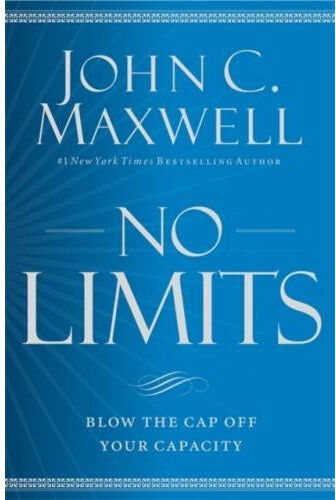
Little Brown Book Group No Limits: Blow the Cap Off Your Capacity by John C. Maxwell – Personal Growth & Leadership Development GuideNo Limits: Blow the CAP Off Your Capacity Description We often treat the word capacity as if it were a natural law of limitation. Unfortunately; most of us are much more comfortable defining what we perceive is off limits rather than what's possible. Could it be that many people have allowed what they perceive as capacity to define them? Have they allowed their perception to limit their attitudes about their potential? In his newest book; John Maxwell identifies 17 core capacities. Some of these are abilities we all already possess; such as energy; creativity and leadership. Others are aspects of our lives controlled by our choices; like our attitudes; character; and intentionality. Maxwell examines each of these 17 capacities; and provides clear and actionable advice on how you can increase your potential in each. He will guide you on how to identify; grow; and apply your critical capacities to your daily life. Once you've blown the 'cap' off your capacities; you'll find yourself more successful--and fulfilled--in your daily life.5,99 £*Shipping: 2,99 £Secure redirect to the provider
-
Tiny Tots Teens Trends Crawling Doll Baby Toy With Music, Early Education Crawling Guidance, Head Up Training Toy For Babies yellowIntroduce your baby to a fun and educational experience with our Crawling Doll Baby Toy with Music. This delightful toy is designed to guide babies as they learn to crawl, promoting early development and coordination. Fun guidance for babies to...29,97 $*Shipping: 0,00 $Secure redirect to the provider
-
Bluebird Mentors: How to Help and Be Helped by Russell Brand – Personal Growth & Guidance BookRussell Brand Mentors How to Help and Be Helped ‘I have mentors in every area of my life, as a comic, a dad, a recovering drug addict, a spiritual being and as a man who believes that we, as individuals and the great globe itself, are works in progress and that through a chain of mentorship we can improve individually and globally, together . . . One of the unexpected advantages my drug addiction granted is that the process of recovery that I practise includes a mentorship tradition. I will encourage you to find mentors of your own and explain how you may better use the ones you already have. Furthermore, I will tell you about my experiences mentoring others and how invaluable that has been on my ongoing journey to self-acceptance and how it has helped me to transform from a bewildered and volatile vagabond to a (mostly) present and (usually) focussed husband and father.’ – Russell Brand Mentors: How to Help and Be Helped describes the impact that a series of significant people have had on the author – from the wayward youths he tried to emulate growing up in Essex, through the first ex-junkie stage, to the people he turns to today to help him be a better father. It explores how we all – consciously and unconsciously – choose guides, mentors and heroes throughout our lives and examines the new perspectives they can bring.1,99 £*Shipping: 1,99 £Secure redirect to the provider
-
The Readers Paradise Enhancing Your Leadership Skills: A Practical Handbook for Success by Prof. V.K.Simon - Non Fiction Paperback - Leadership & Professional DevelopmentEnhance your leadership skills with this practical handbook by Prof. V.K.Simon. Written for anyone looking to lead with confidence and clarity, it blends self-awareness, emotional intelligence, and real-world strategy to help you achieve success. Whether you're a first-time manager or a seasoned executive, this compact guide delivers tools to strengthen decision-making, communication, and team impact in a fast-changing global workplace. It's built around the idea that great leadership is learned through practice, not theory alone, and covers the core competencies every effective leader needs, starting with self-awareness and emotional intelligence.2,99 £*Shipping: 2,99 £Secure redirect to the provider
-
What are similarity ratios?
Similarity ratios are ratios that compare the corresponding sides of two similar figures. They help us understand the relationship between the sides of similar shapes. The ratio of corresponding sides in similar figures is always the same, which means that if you know the ratio of one pair of sides, you can use it to find the ratio of other pairs of sides. Similarity ratios are important in geometry and are used to solve problems involving similar figures. **
-
What is the difference between similarity theorem 1 and similarity theorem 2?
Similarity theorem 1, also known as the Angle-Angle (AA) similarity theorem, states that if two angles of one triangle are congruent to two angles of another triangle, then the triangles are similar. On the other hand, similarity theorem 2, also known as the Side-Angle-Side (SAS) similarity theorem, states that if two sides of one triangle are proportional to two sides of another triangle and the included angles are congruent, then the triangles are similar. The main difference between the two theorems is the criteria for establishing similarity - AA theorem focuses on angle congruence, while SAS theorem focuses on both side proportionality and angle congruence. **
-
How can the similarity factor for determining the similarity of triangles be calculated?
The similarity factor for determining the similarity of triangles can be calculated by comparing the corresponding sides of the two triangles. If the ratio of the lengths of the corresponding sides of the two triangles is the same, then the triangles are similar. This ratio can be calculated by dividing the length of one side of a triangle by the length of the corresponding side of the other triangle. If all three ratios of corresponding sides are equal, then the triangles are similar. This is known as the similarity factor and is used to determine the similarity of triangles. **
-
How can one calculate the similarity factor to determine the similarity of triangles?
The similarity factor can be calculated by comparing the corresponding sides of two triangles. To do this, one can divide the length of one side of the first triangle by the length of the corresponding side of the second triangle. This process is repeated for all three pairs of corresponding sides. If the ratios of the corresponding sides are equal, then the triangles are similar, and the similarity factor will be 1. If the ratios are not equal, the similarity factor will be the ratio of the two triangles' areas. **
Similar search terms for Similarity
-
Robin Sharma 3-Book Collection Set by Robin Sharma - Leadership & Personal Growth - Non Fiction - PaperbackTitles in This Set:. The Leader Who Had No Title:A Modern Fable on Real Success in Business and in Life. The Saint the Surfer and the Ceo. The Secret Letters of the Monk Who Sold His Ferrari Condition: BRAND NEW. Format: Paperback. ISBN: Overview:. Discover a powerful trio of Robin Sharma’s most enduring leadership parables in one compact, ready-to-read collection. The Leader Who Had No Title presents a modern fable about real success that transcends rank, showing readers that true leadership is earned through daily habits, service, and a clear sense of purpose. The Saint the Surfer and the Ceo follows a transformative journey in which a seeker encounters three distinct teachers—each embodying a different path to fulfilment—and learns how to align heart and ambition in a busy, results-driven world. The Secret Letters of the Monk Who Sold His Ferrari gathers intimate letters offering practical wisdom for happiness, resilience, and authentic living. Together, these three paperback titles form a cohesive program for personal and professional growth, designed for busy professionals, aspiring leaders, students of self-improvement, and anyone seeking to elevate their daily life. The brand-new editions are portable, gift-ready, and built to inspire daily action on the road to higher achievement. What Makes This Collection Special:. This set is more than a bookmarkable trio; it’s a guided reading journey that builds a practical leadership toolkit across three distinct lenses. The Leader Who Had No Title introduces core principles of influence without formal authority, while The Saint the Surfer and the Ceo expands those ideas through memorable archetypes and universal truths about purpose-driven work. The Secret Letters of the Monk Who Sold His Ferrari distills those insights into bite-sized, reflective letters you can return to again and again. The result is a binge-worthy, portable library that reinforces consistent values—clarity, discipline, service, and fulfilment—across business and life. It’s an ideal gift for collaborators, graduates, or anyone ready to turn inspiration into tangible, everyday impact. Books Included in This Collection:. The Leader Who Had No Title:A Modern Fable on Real Success in Business and in Life. Blending storytelling with practical wisdom, this modern fable invites readers to question leadership as a title and embrace leadership as daily practice. Through a narrative about a reluctant employee who learns from mentors, the book distills actionable habits—communication, courage, accountability, and generosity—that elevate performance and character in the workplace and at home. It’s accessible, motivating, and designed for busy readers seeking a clear path from idea to action. Expect crisp chapters, memorable parables, and principles you can apply immediately to improve teamwork, decision-making, and personal momentum. The Saint the Surfer and the Ceo. Across continents and cultures, this book leads you through a journey of...22,99 £*Shipping: 2,99 £Secure redirect to the provider
-
Tiny Tots Teens Trends Crawling Doll Baby Toy With Music, Early Education Crawling Guidance, Head Up Training Toy For Babies pinkIntroduce your baby to a fun and educational experience with our Crawling Doll Baby Toy with Music. This delightful toy is designed to guide babies as they learn to crawl, promoting early development and coordination. Fun guidance for babies to...29,97 $*Shipping: 0,00 $Secure redirect to the provider
-
Tiny Tots Teens Trends Crawling Doll Baby Toy With Music, Early Education Crawling Guidance, Head Up Training Toy For Babies blueIntroduce your baby to a fun and educational experience with our Crawling Doll Baby Toy with Music. This delightful toy is designed to guide babies as they learn to crawl, promoting early development and coordination. Fun guidance for babies to...29,97 $*Shipping: 0,00 $Secure redirect to the provider
-
What is the similarity ratio?
The similarity ratio is a comparison of the corresponding sides of two similar figures. It is used to determine how the dimensions of one figure compare to the dimensions of another figure when they are similar. The ratio is calculated by dividing the length of a side of one figure by the length of the corresponding side of the other figure. This ratio remains constant for all pairs of corresponding sides in similar figures. **
-
What is similarity in mathematics?
In mathematics, similarity refers to the relationship between two objects or shapes that have the same shape but are not necessarily the same size. This means that the objects are proportional to each other, with corresponding angles being equal and corresponding sides being in the same ratio. Similarity is often used in geometry to compare and analyze shapes, allowing for the transfer of properties and measurements from one shape to another. **
-
Do you see the similarity?
Yes, I see the similarity between the two concepts. Both share common characteristics and features that make them comparable. The similarities can be observed in their structure, function, and behavior. These similarities help in understanding and drawing parallels between the two concepts. **
-
'How do you prove similarity?'
Similarity between two objects can be proven using various methods. One common method is to show that the corresponding angles of the two objects are congruent, and that the corresponding sides are in proportion to each other. Another method is to use transformations such as dilation, where one object can be scaled up or down to match the other object. Additionally, if the ratio of the lengths of corresponding sides is equal, then the two objects are similar. These methods can be used to prove similarity in geometric figures such as triangles or other polygons. **
* All prices are inclusive of VAT and, if applicable, plus shipping costs. The offer information is based on the details provided by the respective shop and is updated through automated processes. Real-time updates do not occur, so deviations can occur in individual cases. ** Note: Parts of this content were created by AI.