Buy mentorcoaching.eu ?
We are moving the project
mentorcoaching.eu .
Are you interested in purchasing the domain
mentorcoaching.eu ?
domain@kv-gmbh.de · 0541-91531010
Buy mentorcoaching.eu ?
What is the difference between molar ratio and mass ratio?
The molar ratio refers to the ratio of moles of one substance to another in a chemical reaction, while the mass ratio refers to the ratio of the masses of the substances involved. Molar ratio is based on the number of molecules or moles of each substance, while mass ratio is based on the actual weights of the substances. Molar ratio is used to determine the stoichiometry of a reaction, while mass ratio is used to calculate the amount of each substance needed for a reaction. **
What is ratio analysis?
Ratio analysis is a method of evaluating the financial performance of a company by analyzing the relationships between different financial variables. It involves calculating and interpreting various ratios such as liquidity ratios, profitability ratios, and solvency ratios to assess the company's financial health and performance. Ratio analysis helps in identifying the strengths and weaknesses of a company, comparing its performance with industry benchmarks, and making informed decisions about investments or lending. It provides valuable insights into the company's operational efficiency, profitability, and overall financial stability. **


Similar search terms for Ratio
Top-Angebote
Products related to Ratio:
-
Drop Dash Deals Heavy Duty Roll Up Door Chain Hoist Gear Ratio Garage Door Chain Hoist Manual Opener Heavy Duty Roll Up Door Chain Hoist Gear Ratio Garage Door Chain Hoist Manual OpenerOpen even the heaviest rollup doors without strain with this 1 pc of premium rollup door chain hoist designed for homeowners and professionals alike. Whether your warehouse, garage, or storage unit lacks power or you simply want a reliable manual...239,97 $*Shipping: 0,00 $Secure redirect to the provider
-
Uplifted Finds Universal 52mm Analog LED Gauge With White Case And Gauge Pod air Fuel RatioUpgrade your vehicles dashboard with this universal 52mm analog LED gauge set designed for accurate and responsive readings. The clean white case and bright LED display deliver excellent visibility day and night, giving your car a modern and...162,97 $*Shipping: 0,00 $Secure redirect to the provider
-
Uplifted Finds 52mm Air Fuel Ratio Gauge Digital AFR Display For Gasoline Cars gauge Without SensorImprove your engine monitoring with this 52mm digital air fuel ratio gauge, designed to provide clear, realtime AFR readings for gasoline vehicles. The smoked lens display offers sharp visibility day or night, helping you track mixture performance...135,97 $*Shipping: 0,00 $Secure redirect to the provider
-
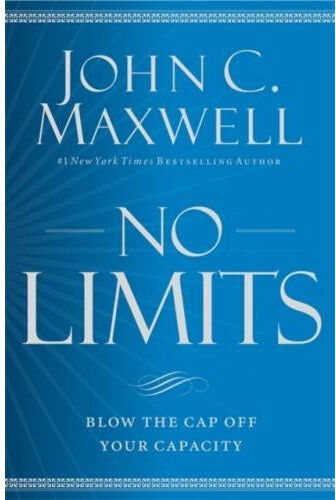
Little Brown Book Group No Limits: Blow the Cap Off Your Capacity by John C. Maxwell – Personal Growth & Leadership Development GuideNo Limits: Blow the CAP Off Your Capacity Description We often treat the word capacity as if it were a natural law of limitation. Unfortunately; most of us are much more comfortable defining what we perceive is off limits rather than what's possible. Could it be that many people have allowed what they perceive as capacity to define them? Have they allowed their perception to limit their attitudes about their potential? In his newest book; John Maxwell identifies 17 core capacities. Some of these are abilities we all already possess; such as energy; creativity and leadership. Others are aspects of our lives controlled by our choices; like our attitudes; character; and intentionality. Maxwell examines each of these 17 capacities; and provides clear and actionable advice on how you can increase your potential in each. He will guide you on how to identify; grow; and apply your critical capacities to your daily life. Once you've blown the 'cap' off your capacities; you'll find yourself more successful--and fulfilled--in your daily life.5,99 £*Shipping: 2,99 £Secure redirect to the provider


-
What are ratio equations?
Ratio equations are mathematical expressions that compare the relative sizes of two quantities. They are typically written in the form of a fraction, where the numerator represents the first quantity and the denominator represents the second quantity. Ratio equations are used to express the relationship between different quantities and are often used in solving proportion problems or in comparing different quantities in real-world situations. They are also commonly used in algebra and geometry to represent the relationship between different variables. **
-
What are ratio problems?
Ratio problems involve comparing the relationship between two or more quantities. These problems often require finding the ratio between different quantities, such as the ratio of boys to girls in a classroom or the ratio of ingredients in a recipe. Ratio problems can also involve using the given ratio to solve for unknown quantities or to compare different scenarios. These problems are commonly found in math and real-life situations, and they help develop critical thinking and problem-solving skills. **
-
How do you go from the mass ratio to the formula ratio?
To go from the mass ratio to the formula ratio, you first need to determine the molar mass of each element in the compound. Then, divide the given mass ratio by the molar mass of each element to find the number of moles of each element present. Finally, divide the number of moles of each element by the smallest number of moles to obtain the simplest whole number ratio, which represents the formula ratio of the compound. **
-
What is the relationship between the mass ratio and the atomic number ratio?
The mass ratio between two elements is directly related to the atomic number ratio. This is because the mass of an atom is primarily determined by the number of protons and neutrons in its nucleus, and the atomic number is determined by the number of protons. Therefore, the mass ratio between two elements is directly proportional to the atomic number ratio. As the atomic number ratio between two elements increases, the mass ratio between them also increases. **


What is the CPU core ratio or the CPU core ratio per CCX?
The CPU core ratio, also known as the CPU multiplier, is a setting that determines the frequency at which the CPU cores operate. It is a key factor in determining the overall performance of the CPU. The CPU core ratio per CCX refers to the specific core ratio settings for each CCX (Core Complex) within a CPU. In multi-core CPUs, such as those using AMD's Ryzen architecture, each CCX contains a group of CPU cores. The CPU core ratio per CCX allows for individual control over the frequency of each CCX, providing more flexibility in optimizing performance for specific workloads. **
What is the similarity ratio?
The similarity ratio is a comparison of the corresponding sides of two similar figures. It is used to determine how the dimensions of one figure compare to the dimensions of another figure when they are similar. The ratio is calculated by dividing the length of a side of one figure by the length of the corresponding side of the other figure. This ratio remains constant for all pairs of corresponding sides in similar figures. **
Top-Angebote
Products related to Ratio:
-
Drop Dash Deals Ratio Speed Reducer Gearbox For Honda Engine Heavy Duty Gear Reduction Box Ratio Speed Reducer Gearbox For Honda Engine Heavy Duty Gear Reduction BoxBegin with a surge of power where you need it most this 1 pc of speed reducer gearbox takes your Honda GX270 engines high RPM and converts it into smooth, controlled torque for demanding tasks. Designed for mechanics, builders, and DIY enthusiasts...229,97 $*Shipping: 0,00 $Secure redirect to the provider
-
Uplift Treasures Dental Straight Nose Cone Low Speed Handpiece 1 To 1 Ratio For E Type Motors Dental Straight Nose Cone Low Speed Handpiece 1 To 1 Ratio For E Type MotorsProduct Description: This Dental Straight Nose Cone Handpiece delivers smooth, lowspeed precision for polishing, trimming, and lab work. Designed with a 1:1 Etype compatibility, it fits most lowspeed dental motors and ensures stable, lowvibration...76,97 $*Shipping: 0,00 $Secure redirect to the provider
-
Drop Dash Deals Heavy Duty Roll Up Door Chain Hoist Gear Ratio Garage Door Chain Hoist Manual Opener Heavy Duty Roll Up Door Chain Hoist Gear Ratio Garage Door Chain Hoist Manual OpenerOpen even the heaviest rollup doors without strain with this 1 pc of premium rollup door chain hoist designed for homeowners and professionals alike. Whether your warehouse, garage, or storage unit lacks power or you simply want a reliable manual...239,97 $*Shipping: 0,00 $Secure redirect to the provider
-
Uplifted Finds Universal 52mm Analog LED Gauge With White Case And Gauge Pod air Fuel RatioUpgrade your vehicles dashboard with this universal 52mm analog LED gauge set designed for accurate and responsive readings. The clean white case and bright LED display deliver excellent visibility day and night, giving your car a modern and...162,97 $*Shipping: 0,00 $Secure redirect to the provider
-
What is the difference between molar ratio and mass ratio?
The molar ratio refers to the ratio of moles of one substance to another in a chemical reaction, while the mass ratio refers to the ratio of the masses of the substances involved. Molar ratio is based on the number of molecules or moles of each substance, while mass ratio is based on the actual weights of the substances. Molar ratio is used to determine the stoichiometry of a reaction, while mass ratio is used to calculate the amount of each substance needed for a reaction. **
-
What is ratio analysis?
Ratio analysis is a method of evaluating the financial performance of a company by analyzing the relationships between different financial variables. It involves calculating and interpreting various ratios such as liquidity ratios, profitability ratios, and solvency ratios to assess the company's financial health and performance. Ratio analysis helps in identifying the strengths and weaknesses of a company, comparing its performance with industry benchmarks, and making informed decisions about investments or lending. It provides valuable insights into the company's operational efficiency, profitability, and overall financial stability. **
-
What are ratio equations?
Ratio equations are mathematical expressions that compare the relative sizes of two quantities. They are typically written in the form of a fraction, where the numerator represents the first quantity and the denominator represents the second quantity. Ratio equations are used to express the relationship between different quantities and are often used in solving proportion problems or in comparing different quantities in real-world situations. They are also commonly used in algebra and geometry to represent the relationship between different variables. **
-
What are ratio problems?
Ratio problems involve comparing the relationship between two or more quantities. These problems often require finding the ratio between different quantities, such as the ratio of boys to girls in a classroom or the ratio of ingredients in a recipe. Ratio problems can also involve using the given ratio to solve for unknown quantities or to compare different scenarios. These problems are commonly found in math and real-life situations, and they help develop critical thinking and problem-solving skills. **
Similar search terms for Ratio
-
Uplifted Finds 52mm Air Fuel Ratio Gauge Digital AFR Display For Gasoline Cars gauge Without SensorImprove your engine monitoring with this 52mm digital air fuel ratio gauge, designed to provide clear, realtime AFR readings for gasoline vehicles. The smoked lens display offers sharp visibility day or night, helping you track mixture performance...135,97 $*Shipping: 0,00 $Secure redirect to the provider
-
Little Brown Book Group No Limits: Blow the Cap Off Your Capacity by John C. Maxwell – Personal Growth & Leadership Development GuideNo Limits: Blow the CAP Off Your Capacity Description We often treat the word capacity as if it were a natural law of limitation. Unfortunately; most of us are much more comfortable defining what we perceive is off limits rather than what's possible. Could it be that many people have allowed what they perceive as capacity to define them? Have they allowed their perception to limit their attitudes about their potential? In his newest book; John Maxwell identifies 17 core capacities. Some of these are abilities we all already possess; such as energy; creativity and leadership. Others are aspects of our lives controlled by our choices; like our attitudes; character; and intentionality. Maxwell examines each of these 17 capacities; and provides clear and actionable advice on how you can increase your potential in each. He will guide you on how to identify; grow; and apply your critical capacities to your daily life. Once you've blown the 'cap' off your capacities; you'll find yourself more successful--and fulfilled--in your daily life.5,99 £*Shipping: 2,99 £Secure redirect to the provider
-
Tiny Tots Teens Trends Crawling Doll Baby Toy With Music, Early Education Crawling Guidance, Head Up Training Toy For Babies pinkIntroduce your baby to a fun and educational experience with our Crawling Doll Baby Toy with Music. This delightful toy is designed to guide babies as they learn to crawl, promoting early development and coordination. Fun guidance for babies to...29,97 $*Shipping: 0,00 $Secure redirect to the provider
-
Uplifted Finds 52mm Air Fuel Ratio Gauge Digital AFR Display For Gasoline Cars sensor Without GaugeImprove your engine monitoring with this 52mm digital air fuel ratio gauge, designed to provide clear, realtime AFR readings for gasoline vehicles. The smoked lens display offers sharp visibility day or night, helping you track mixture performance...135,97 $*Shipping: 0,00 $Secure redirect to the provider
-
How do you go from the mass ratio to the formula ratio?
To go from the mass ratio to the formula ratio, you first need to determine the molar mass of each element in the compound. Then, divide the given mass ratio by the molar mass of each element to find the number of moles of each element present. Finally, divide the number of moles of each element by the smallest number of moles to obtain the simplest whole number ratio, which represents the formula ratio of the compound. **
-
What is the relationship between the mass ratio and the atomic number ratio?
The mass ratio between two elements is directly related to the atomic number ratio. This is because the mass of an atom is primarily determined by the number of protons and neutrons in its nucleus, and the atomic number is determined by the number of protons. Therefore, the mass ratio between two elements is directly proportional to the atomic number ratio. As the atomic number ratio between two elements increases, the mass ratio between them also increases. **
-
What is the CPU core ratio or the CPU core ratio per CCX?
The CPU core ratio, also known as the CPU multiplier, is a setting that determines the frequency at which the CPU cores operate. It is a key factor in determining the overall performance of the CPU. The CPU core ratio per CCX refers to the specific core ratio settings for each CCX (Core Complex) within a CPU. In multi-core CPUs, such as those using AMD's Ryzen architecture, each CCX contains a group of CPU cores. The CPU core ratio per CCX allows for individual control over the frequency of each CCX, providing more flexibility in optimizing performance for specific workloads. **
-
What is the similarity ratio?
The similarity ratio is a comparison of the corresponding sides of two similar figures. It is used to determine how the dimensions of one figure compare to the dimensions of another figure when they are similar. The ratio is calculated by dividing the length of a side of one figure by the length of the corresponding side of the other figure. This ratio remains constant for all pairs of corresponding sides in similar figures. **
* All prices are inclusive of VAT and, if applicable, plus shipping costs. The offer information is based on the details provided by the respective shop and is updated through automated processes. Real-time updates do not occur, so deviations can occur in individual cases. ** Note: Parts of this content were created by AI.