Buy mentorcoaching.eu ?
We are moving the project
mentorcoaching.eu .
Are you interested in purchasing the domain
mentorcoaching.eu ?
domain@kv-gmbh.de · 0541-91531010
Buy mentorcoaching.eu ?
How do non-homologous recombination and homologous recombination work?
Non-homologous recombination involves the joining of two DNA molecules at non-homologous sequences, resulting in the insertion, deletion, or rearrangement of genetic material. This process is often error-prone and can lead to mutations. Homologous recombination, on the other hand, involves the exchange of genetic material between two similar DNA molecules, typically occurring during meiosis. This process is important for repairing DNA damage and ensuring genetic diversity. It involves the exchange of genetic material between homologous chromosomes, resulting in the formation of new combinations of genes. **
Are modifications homologous?
Modifications can be homologous if they are derived from a common ancestral modification and have similar functions in different species. For example, the presence of similar modifications in the wings of bats and birds, both of which enable flight, suggests homology. However, modifications can also be analogous, meaning they have similar functions but are not derived from a common ancestor. An example of analogous modifications is the wings of birds and insects, which have different evolutionary origins but serve the same function of flight. **

Similar search terms for Homologous
Top-Angebote
Products related to Homologous:
-
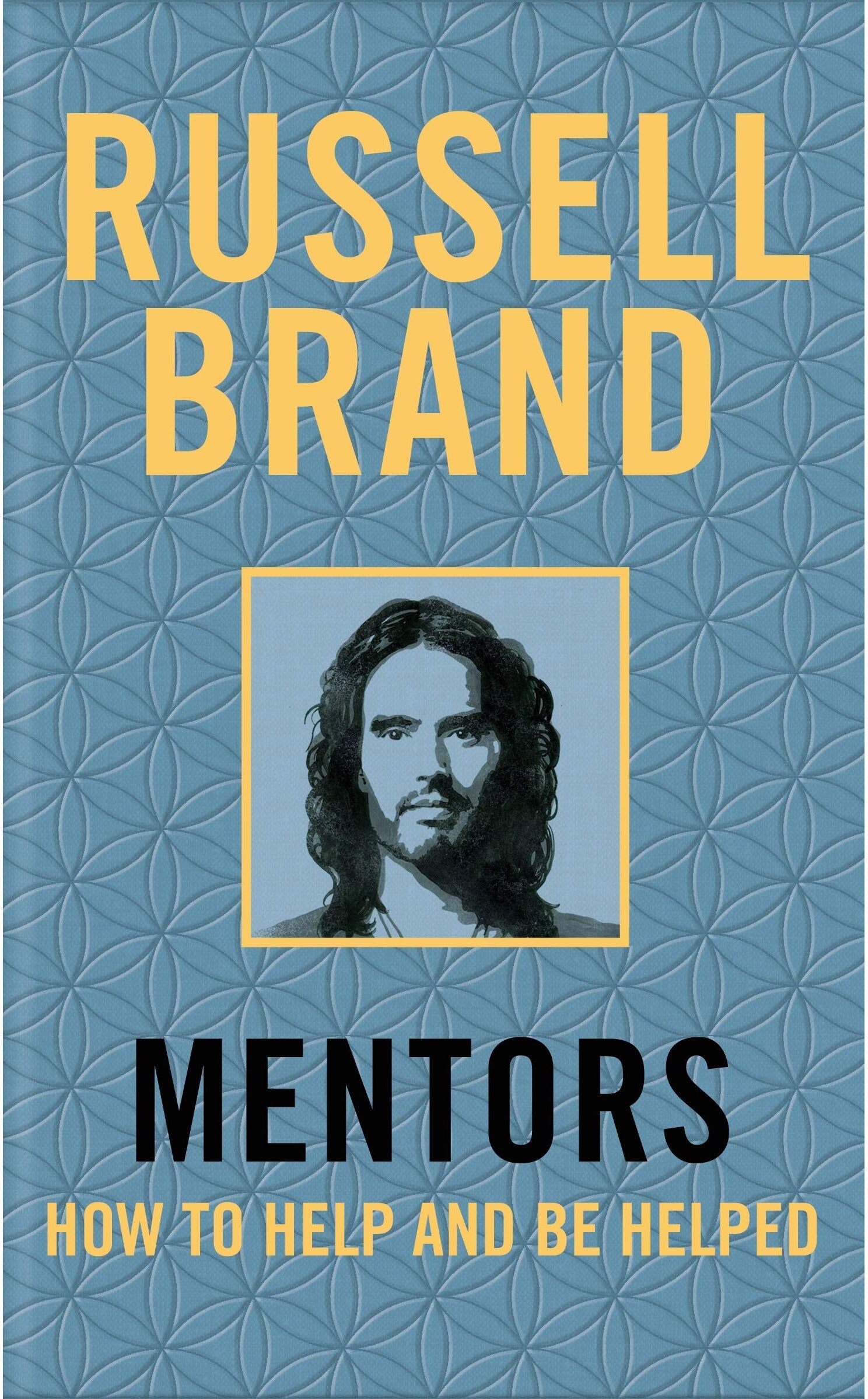
Bluebird Mentors: How to Help and Be Helped by Russell Brand – Personal Growth & Guidance BookRussell Brand Mentors How to Help and Be Helped ‘I have mentors in every area of my life, as a comic, a dad, a recovering drug addict, a spiritual being and as a man who believes that we, as individuals and the great globe itself, are works in progress and that through a chain of mentorship we can improve individually and globally, together . . . One of the unexpected advantages my drug addiction granted is that the process of recovery that I practise includes a mentorship tradition. I will encourage you to find mentors of your own and explain how you may better use the ones you already have. Furthermore, I will tell you about my experiences mentoring others and how invaluable that has been on my ongoing journey to self-acceptance and how it has helped me to transform from a bewildered and volatile vagabond to a (mostly) present and (usually) focussed husband and father.’ – Russell Brand Mentors: How to Help and Be Helped describes the impact that a series of significant people have had on the author – from the wayward youths he tried to emulate growing up in Essex, through the first ex-junkie stage, to the people he turns to today to help him be a better father. It explores how we all – consciously and unconsciously – choose guides, mentors and heroes throughout our lives and examines the new perspectives they can bring.1,99 £*Shipping: 1,99 £Secure redirect to the provider
-
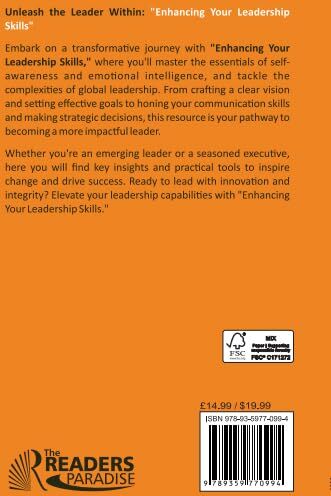
The Readers Paradise Enhancing Your Leadership Skills: A Practical Handbook for Success by Prof. V.K.Simon - Non Fiction Paperback - Leadership & Professional DevelopmentEnhance your leadership skills with this practical handbook by Prof. V.K.Simon. Written for anyone looking to lead with confidence and clarity, it blends self-awareness, emotional intelligence, and real-world strategy to help you achieve success. Whether you're a first-time manager or a seasoned executive, this compact guide delivers tools to strengthen decision-making, communication, and team impact in a fast-changing global workplace. It's built around the idea that great leadership is learned through practice, not theory alone, and covers the core competencies every effective leader needs, starting with self-awareness and emotional intelligence.2,99 £*Shipping: 2,99 £Secure redirect to the provider
-
Robin Sharma 3-Book Collection Set by Robin Sharma - Leadership & Personal Growth - Non Fiction - PaperbackTitles in This Set:. The Leader Who Had No Title:A Modern Fable on Real Success in Business and in Life. The Saint the Surfer and the Ceo. The Secret Letters of the Monk Who Sold His Ferrari Condition: BRAND NEW. Format: Paperback. ISBN: Overview:. Discover a powerful trio of Robin Sharma’s most enduring leadership parables in one compact, ready-to-read collection. The Leader Who Had No Title presents a modern fable about real success that transcends rank, showing readers that true leadership is earned through daily habits, service, and a clear sense of purpose. The Saint the Surfer and the Ceo follows a transformative journey in which a seeker encounters three distinct teachers—each embodying a different path to fulfilment—and learns how to align heart and ambition in a busy, results-driven world. The Secret Letters of the Monk Who Sold His Ferrari gathers intimate letters offering practical wisdom for happiness, resilience, and authentic living. Together, these three paperback titles form a cohesive program for personal and professional growth, designed for busy professionals, aspiring leaders, students of self-improvement, and anyone seeking to elevate their daily life. The brand-new editions are portable, gift-ready, and built to inspire daily action on the road to higher achievement. What Makes This Collection Special:. This set is more than a bookmarkable trio; it’s a guided reading journey that builds a practical leadership toolkit across three distinct lenses. The Leader Who Had No Title introduces core principles of influence without formal authority, while The Saint the Surfer and the Ceo expands those ideas through memorable archetypes and universal truths about purpose-driven work. The Secret Letters of the Monk Who Sold His Ferrari distills those insights into bite-sized, reflective letters you can return to again and again. The result is a binge-worthy, portable library that reinforces consistent values—clarity, discipline, service, and fulfilment—across business and life. It’s an ideal gift for collaborators, graduates, or anyone ready to turn inspiration into tangible, everyday impact. Books Included in This Collection:. The Leader Who Had No Title:A Modern Fable on Real Success in Business and in Life. Blending storytelling with practical wisdom, this modern fable invites readers to question leadership as a title and embrace leadership as daily practice. Through a narrative about a reluctant employee who learns from mentors, the book distills actionable habits—communication, courage, accountability, and generosity—that elevate performance and character in the workplace and at home. It’s accessible, motivating, and designed for busy readers seeking a clear path from idea to action. Expect crisp chapters, memorable parables, and principles you can apply immediately to improve teamwork, decision-making, and personal momentum. The Saint the Surfer and the Ceo. Across continents and cultures, this book leads you through a journey of...22,99 £*Shipping: 2,99 £Secure redirect to the provider


-
Why are bird feathers homologous?
Bird feathers are homologous because they all share a common evolutionary origin. They are derived from the same structure in the common ancestor of all birds. Despite the variations in size, shape, and color, bird feathers all serve the same fundamental purpose of providing insulation, aiding in flight, and attracting mates. This shared ancestry and function make bird feathers homologous structures. **
-
Can non-homologous chromosomes cross over?
No, non-homologous chromosomes cannot undergo crossing over during meiosis. Crossing over is a process that involves the exchange of genetic material between homologous chromosomes, which are chromosomes that are similar in size, shape, and gene content. Non-homologous chromosomes do not have the necessary similarity in order to undergo crossing over. **
-
Which homologous organs exist in plants?
Homologous organs in plants are structures that have a common evolutionary origin but may have different functions. Examples of homologous organs in plants include the various types of leaves, such as simple leaves, compound leaves, and scale leaves, which all have a common origin but serve different functions in different plant species. Another example is the different types of flowers, which have a common origin but may have evolved to attract different pollinators or serve different reproductive strategies. Additionally, the various types of stems, such as rhizomes, stolons, and tubers, are also considered homologous organs in plants. **
-
Are bat wings homologous or analogous?
Bat wings are homologous structures, meaning they share a common evolutionary origin with the wings of other mammals, such as humans and whales. This suggests that bats, humans, and whales all inherited their limb structure from a common ancestor. In contrast, analogous structures are those that have similar functions but different evolutionary origins, such as the wings of birds and insects. **


Are Maybugs analogous or homologous animals?
Maybugs, also known as cockchafers, are not analogous or homologous to any other animals. They are a unique species of beetle belonging to the family Scarabaeidae. Analogous structures are similar in function but not in structure or evolutionary origin, while homologous structures are similar in structure and evolutionary origin but not necessarily in function. Maybugs do not share these similarities with any other animals, making them a distinct and separate species. **
How do you arrange a homologous series?
To arrange a homologous series, you would start by identifying a common functional group or structural feature that is repeated in each compound. Then, you would organize the compounds in the series based on increasing molecular size or increasing number of repeating units of the functional group. This could involve arranging the compounds in order of increasing carbon chain length, increasing number of double bonds, or increasing number of functional groups. By organizing the compounds in this way, you can easily compare their properties and trends across the series. **
Top-Angebote
Products related to Homologous:
-
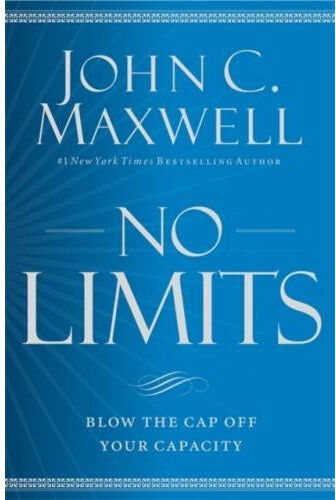
Little Brown Book Group No Limits: Blow the Cap Off Your Capacity by John C. Maxwell – Personal Growth & Leadership Development GuideNo Limits: Blow the CAP Off Your Capacity Description We often treat the word capacity as if it were a natural law of limitation. Unfortunately; most of us are much more comfortable defining what we perceive is off limits rather than what's possible. Could it be that many people have allowed what they perceive as capacity to define them? Have they allowed their perception to limit their attitudes about their potential? In his newest book; John Maxwell identifies 17 core capacities. Some of these are abilities we all already possess; such as energy; creativity and leadership. Others are aspects of our lives controlled by our choices; like our attitudes; character; and intentionality. Maxwell examines each of these 17 capacities; and provides clear and actionable advice on how you can increase your potential in each. He will guide you on how to identify; grow; and apply your critical capacities to your daily life. Once you've blown the 'cap' off your capacities; you'll find yourself more successful--and fulfilled--in your daily life.5,99 £*Shipping: 2,99 £Secure redirect to the provider
-
Tiny Tots Teens Trends Crawling Doll Baby Toy With Music, Early Education Crawling Guidance, Head Up Training Toy For Babies yellowIntroduce your baby to a fun and educational experience with our Crawling Doll Baby Toy with Music. This delightful toy is designed to guide babies as they learn to crawl, promoting early development and coordination. Fun guidance for babies to...29,97 $*Shipping: 0,00 $Secure redirect to the provider
-
Bluebird Mentors: How to Help and Be Helped by Russell Brand – Personal Growth & Guidance BookRussell Brand Mentors How to Help and Be Helped ‘I have mentors in every area of my life, as a comic, a dad, a recovering drug addict, a spiritual being and as a man who believes that we, as individuals and the great globe itself, are works in progress and that through a chain of mentorship we can improve individually and globally, together . . . One of the unexpected advantages my drug addiction granted is that the process of recovery that I practise includes a mentorship tradition. I will encourage you to find mentors of your own and explain how you may better use the ones you already have. Furthermore, I will tell you about my experiences mentoring others and how invaluable that has been on my ongoing journey to self-acceptance and how it has helped me to transform from a bewildered and volatile vagabond to a (mostly) present and (usually) focussed husband and father.’ – Russell Brand Mentors: How to Help and Be Helped describes the impact that a series of significant people have had on the author – from the wayward youths he tried to emulate growing up in Essex, through the first ex-junkie stage, to the people he turns to today to help him be a better father. It explores how we all – consciously and unconsciously – choose guides, mentors and heroes throughout our lives and examines the new perspectives they can bring.1,99 £*Shipping: 1,99 £Secure redirect to the provider
-
The Readers Paradise Enhancing Your Leadership Skills: A Practical Handbook for Success by Prof. V.K.Simon - Non Fiction Paperback - Leadership & Professional DevelopmentEnhance your leadership skills with this practical handbook by Prof. V.K.Simon. Written for anyone looking to lead with confidence and clarity, it blends self-awareness, emotional intelligence, and real-world strategy to help you achieve success. Whether you're a first-time manager or a seasoned executive, this compact guide delivers tools to strengthen decision-making, communication, and team impact in a fast-changing global workplace. It's built around the idea that great leadership is learned through practice, not theory alone, and covers the core competencies every effective leader needs, starting with self-awareness and emotional intelligence.2,99 £*Shipping: 2,99 £Secure redirect to the provider
-
How do non-homologous recombination and homologous recombination work?
Non-homologous recombination involves the joining of two DNA molecules at non-homologous sequences, resulting in the insertion, deletion, or rearrangement of genetic material. This process is often error-prone and can lead to mutations. Homologous recombination, on the other hand, involves the exchange of genetic material between two similar DNA molecules, typically occurring during meiosis. This process is important for repairing DNA damage and ensuring genetic diversity. It involves the exchange of genetic material between homologous chromosomes, resulting in the formation of new combinations of genes. **
-
Are modifications homologous?
Modifications can be homologous if they are derived from a common ancestral modification and have similar functions in different species. For example, the presence of similar modifications in the wings of bats and birds, both of which enable flight, suggests homology. However, modifications can also be analogous, meaning they have similar functions but are not derived from a common ancestor. An example of analogous modifications is the wings of birds and insects, which have different evolutionary origins but serve the same function of flight. **
-
Why are bird feathers homologous?
Bird feathers are homologous because they all share a common evolutionary origin. They are derived from the same structure in the common ancestor of all birds. Despite the variations in size, shape, and color, bird feathers all serve the same fundamental purpose of providing insulation, aiding in flight, and attracting mates. This shared ancestry and function make bird feathers homologous structures. **
-
Can non-homologous chromosomes cross over?
No, non-homologous chromosomes cannot undergo crossing over during meiosis. Crossing over is a process that involves the exchange of genetic material between homologous chromosomes, which are chromosomes that are similar in size, shape, and gene content. Non-homologous chromosomes do not have the necessary similarity in order to undergo crossing over. **
Similar search terms for Homologous
-
Robin Sharma 3-Book Collection Set by Robin Sharma - Leadership & Personal Growth - Non Fiction - PaperbackTitles in This Set:. The Leader Who Had No Title:A Modern Fable on Real Success in Business and in Life. The Saint the Surfer and the Ceo. The Secret Letters of the Monk Who Sold His Ferrari Condition: BRAND NEW. Format: Paperback. ISBN: Overview:. Discover a powerful trio of Robin Sharma’s most enduring leadership parables in one compact, ready-to-read collection. The Leader Who Had No Title presents a modern fable about real success that transcends rank, showing readers that true leadership is earned through daily habits, service, and a clear sense of purpose. The Saint the Surfer and the Ceo follows a transformative journey in which a seeker encounters three distinct teachers—each embodying a different path to fulfilment—and learns how to align heart and ambition in a busy, results-driven world. The Secret Letters of the Monk Who Sold His Ferrari gathers intimate letters offering practical wisdom for happiness, resilience, and authentic living. Together, these three paperback titles form a cohesive program for personal and professional growth, designed for busy professionals, aspiring leaders, students of self-improvement, and anyone seeking to elevate their daily life. The brand-new editions are portable, gift-ready, and built to inspire daily action on the road to higher achievement. What Makes This Collection Special:. This set is more than a bookmarkable trio; it’s a guided reading journey that builds a practical leadership toolkit across three distinct lenses. The Leader Who Had No Title introduces core principles of influence without formal authority, while The Saint the Surfer and the Ceo expands those ideas through memorable archetypes and universal truths about purpose-driven work. The Secret Letters of the Monk Who Sold His Ferrari distills those insights into bite-sized, reflective letters you can return to again and again. The result is a binge-worthy, portable library that reinforces consistent values—clarity, discipline, service, and fulfilment—across business and life. It’s an ideal gift for collaborators, graduates, or anyone ready to turn inspiration into tangible, everyday impact. Books Included in This Collection:. The Leader Who Had No Title:A Modern Fable on Real Success in Business and in Life. Blending storytelling with practical wisdom, this modern fable invites readers to question leadership as a title and embrace leadership as daily practice. Through a narrative about a reluctant employee who learns from mentors, the book distills actionable habits—communication, courage, accountability, and generosity—that elevate performance and character in the workplace and at home. It’s accessible, motivating, and designed for busy readers seeking a clear path from idea to action. Expect crisp chapters, memorable parables, and principles you can apply immediately to improve teamwork, decision-making, and personal momentum. The Saint the Surfer and the Ceo. Across continents and cultures, this book leads you through a journey of...22,99 £*Shipping: 2,99 £Secure redirect to the provider
-
Tiny Tots Teens Trends Crawling Doll Baby Toy With Music, Early Education Crawling Guidance, Head Up Training Toy For Babies blueIntroduce your baby to a fun and educational experience with our Crawling Doll Baby Toy with Music. This delightful toy is designed to guide babies as they learn to crawl, promoting early development and coordination. Fun guidance for babies to...29,97 $*Shipping: 0,00 $Secure redirect to the provider
-
Tiny Tots Teens Trends Crawling Doll Baby Toy With Music, Early Education Crawling Guidance, Head Up Training Toy For Babies pinkIntroduce your baby to a fun and educational experience with our Crawling Doll Baby Toy with Music. This delightful toy is designed to guide babies as they learn to crawl, promoting early development and coordination. Fun guidance for babies to...29,97 $*Shipping: 0,00 $Secure redirect to the provider
-
Which homologous organs exist in plants?
Homologous organs in plants are structures that have a common evolutionary origin but may have different functions. Examples of homologous organs in plants include the various types of leaves, such as simple leaves, compound leaves, and scale leaves, which all have a common origin but serve different functions in different plant species. Another example is the different types of flowers, which have a common origin but may have evolved to attract different pollinators or serve different reproductive strategies. Additionally, the various types of stems, such as rhizomes, stolons, and tubers, are also considered homologous organs in plants. **
-
Are bat wings homologous or analogous?
Bat wings are homologous structures, meaning they share a common evolutionary origin with the wings of other mammals, such as humans and whales. This suggests that bats, humans, and whales all inherited their limb structure from a common ancestor. In contrast, analogous structures are those that have similar functions but different evolutionary origins, such as the wings of birds and insects. **
-
Are Maybugs analogous or homologous animals?
Maybugs, also known as cockchafers, are not analogous or homologous to any other animals. They are a unique species of beetle belonging to the family Scarabaeidae. Analogous structures are similar in function but not in structure or evolutionary origin, while homologous structures are similar in structure and evolutionary origin but not necessarily in function. Maybugs do not share these similarities with any other animals, making them a distinct and separate species. **
-
How do you arrange a homologous series?
To arrange a homologous series, you would start by identifying a common functional group or structural feature that is repeated in each compound. Then, you would organize the compounds in the series based on increasing molecular size or increasing number of repeating units of the functional group. This could involve arranging the compounds in order of increasing carbon chain length, increasing number of double bonds, or increasing number of functional groups. By organizing the compounds in this way, you can easily compare their properties and trends across the series. **
* All prices are inclusive of VAT and, if applicable, plus shipping costs. The offer information is based on the details provided by the respective shop and is updated through automated processes. Real-time updates do not occur, so deviations can occur in individual cases. ** Note: Parts of this content were created by AI.