Buy mentorcoaching.eu ?
We are moving the project
mentorcoaching.eu .
Are you interested in purchasing the domain
mentorcoaching.eu ?
domain@kv-gmbh.de · 0541-91531010
Buy mentorcoaching.eu ?
What is impact in Newtons?
Impact in Newtons refers to the force exerted by an object when it collides with another object. It is a measure of the amount of force applied during the collision. The impact force is typically measured in Newtons, which is the unit of force in the International System of Units (SI). The greater the impact force, the more forceful the collision between the objects. **
What are centimeters and Newtons?
Centimeters are a unit of measurement used to quantify length or distance in the metric system. One centimeter is equal to one hundredth of a meter. Newtons, on the other hand, are a unit of measurement used to quantify force in the International System of Units (SI). One Newton is defined as the force required to accelerate a one-kilogram mass by one meter per second squared. **


Similar search terms for Newtons
Top-Angebote
Products related to Newtons:
-
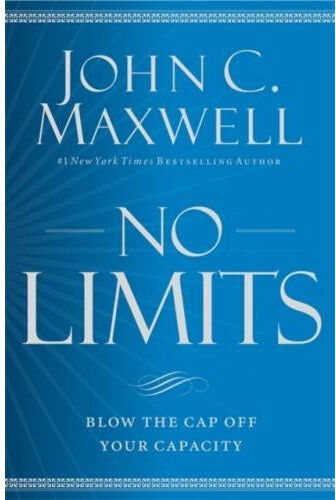
Little Brown Book Group No Limits: Blow the Cap Off Your Capacity by John C. Maxwell – Personal Growth & Leadership Development GuideNo Limits: Blow the CAP Off Your Capacity Description We often treat the word capacity as if it were a natural law of limitation. Unfortunately; most of us are much more comfortable defining what we perceive is off limits rather than what's possible. Could it be that many people have allowed what they perceive as capacity to define them? Have they allowed their perception to limit their attitudes about their potential? In his newest book; John Maxwell identifies 17 core capacities. Some of these are abilities we all already possess; such as energy; creativity and leadership. Others are aspects of our lives controlled by our choices; like our attitudes; character; and intentionality. Maxwell examines each of these 17 capacities; and provides clear and actionable advice on how you can increase your potential in each. He will guide you on how to identify; grow; and apply your critical capacities to your daily life. Once you've blown the 'cap' off your capacities; you'll find yourself more successful--and fulfilled--in your daily life.5,99 £*Shipping: 2,99 £Secure redirect to the provider
-
Tiny Tots Teens Trends Crawling Doll Baby Toy With Music, Early Education Crawling Guidance, Head Up Training Toy For Babies yellowIntroduce your baby to a fun and educational experience with our Crawling Doll Baby Toy with Music. This delightful toy is designed to guide babies as they learn to crawl, promoting early development and coordination. Fun guidance for babies to...29,97 $*Shipping: 0,00 $Secure redirect to the provider
-
Inspire Essentials Classic Newtons Cradle Desk Pendulum cBring a fascinating demonstration of motion and momentum right to your desk. This Newtons cradle uses suspended steel balls to create the familiar backandforth movement that makes physics engaging to watch. The compact physics pendulum toy works as...36,98 $*Shipping: 0,00 $Secure redirect to the provider
-
Inspire Essentials Classic Newtons Cradle Desk Pendulum bBring a fascinating demonstration of motion and momentum right to your desk. This Newtons cradle uses suspended steel balls to create the familiar backandforth movement that makes physics engaging to watch. The compact physics pendulum toy works as...36,98 $*Shipping: 0,00 $Secure redirect to the provider


-
Are 700 Newtons 70 kilograms?
No, 700 Newtons is not equivalent to 70 kilograms. Newtons are a unit of force, while kilograms are a unit of mass. The relationship between the two is given by the equation F = ma, where F is the force in Newtons, m is the mass in kilograms, and a is the acceleration in meters per second squared. Therefore, 700 Newtons could be the force exerted by a 70-kilogram object under a certain acceleration, but they are not the same thing. **
-
How many Newtons correspond to 1 mm if 1 cm corresponds to 2 Newtons?
If 1 cm corresponds to 2 Newtons, then 1 mm corresponds to 0.2 Newtons. This can be calculated by dividing the Newton value for 1 cm (2 N) by 10, since there are 10 mm in 1 cm. Therefore, 2 N / 10 = 0.2 N. **
-
Why do scales not use Newtons?
Scales do not use Newtons as a unit of measurement because Newtons are a unit of force, not mass. Scales are designed to measure the mass of an object, which is the amount of matter in an object. Newtons, on the other hand, measure the force exerted on an object. Therefore, using Newtons to measure mass would be inaccurate and confusing. Instead, scales use units such as grams or kilograms to measure mass. **
-
How much is 600g in Newtons?
To convert 600g to Newtons, we can use the formula F = m * g, where F is the force in Newtons, m is the mass in kilograms, and g is the acceleration due to gravity (approximately 9.81 m/s^2). First, we need to convert 600g to kilograms by dividing by 1000, which gives us 0.6kg. Then, we can multiply 0.6kg by 9.81 m/s^2 to find the force in Newtons. Therefore, 600g is approximately equal to 5.886 Newtons. **


How do you calculate Newtons in g?
To calculate Newtons in grams, you need to first convert the mass from grams to kilograms by dividing the mass in grams by 1000. Then, you can use the formula F = m * g, where F is the force in Newtons, m is the mass in kilograms, and g is the acceleration due to gravity (approximately 9.81 m/s^2). Multiply the mass in kilograms by the acceleration due to gravity to calculate the force in Newtons. **
How do you convert Newtons to centimeters?
To convert Newtons to centimeters, you need to know the force and the distance over which the force is applied. The formula to convert Newtons to centimeters is: Force (N) x Distance (cm) = Work (Joules). By rearranging the formula, you can solve for distance: Distance (cm) = Work (Joules) / Force (N). This will give you the distance in centimeters over which the force is applied. **
Top-Angebote
Products related to Newtons:
-
Inspire Essentials Classic Newtons Cradle Desk Pendulum aBring a fascinating demonstration of motion and momentum right to your desk. This Newtons cradle uses suspended steel balls to create the familiar backandforth movement that makes physics engaging to watch. The compact physics pendulum toy works as...36,98 $*Shipping: 0,00 $Secure redirect to the provider
-
Uplifted Finds Newtons Cradle Balance Pendulum Metal Physics Desk & Table Decor aUnlock the captivating laws of motion with our Newton's Cradle Desk Table Decor. This timeless physics balance ball set is more than just a decorative piece; it is a hypnotic demonstration of conservation of momentum and energy. Crafted with a...39,97 $*Shipping: 0,00 $Secure redirect to the provider
-
Little Brown Book Group No Limits: Blow the Cap Off Your Capacity by John C. Maxwell – Personal Growth & Leadership Development GuideNo Limits: Blow the CAP Off Your Capacity Description We often treat the word capacity as if it were a natural law of limitation. Unfortunately; most of us are much more comfortable defining what we perceive is off limits rather than what's possible. Could it be that many people have allowed what they perceive as capacity to define them? Have they allowed their perception to limit their attitudes about their potential? In his newest book; John Maxwell identifies 17 core capacities. Some of these are abilities we all already possess; such as energy; creativity and leadership. Others are aspects of our lives controlled by our choices; like our attitudes; character; and intentionality. Maxwell examines each of these 17 capacities; and provides clear and actionable advice on how you can increase your potential in each. He will guide you on how to identify; grow; and apply your critical capacities to your daily life. Once you've blown the 'cap' off your capacities; you'll find yourself more successful--and fulfilled--in your daily life.5,99 £*Shipping: 2,99 £Secure redirect to the provider
-
Tiny Tots Teens Trends Crawling Doll Baby Toy With Music, Early Education Crawling Guidance, Head Up Training Toy For Babies yellowIntroduce your baby to a fun and educational experience with our Crawling Doll Baby Toy with Music. This delightful toy is designed to guide babies as they learn to crawl, promoting early development and coordination. Fun guidance for babies to...29,97 $*Shipping: 0,00 $Secure redirect to the provider
-
What is impact in Newtons?
Impact in Newtons refers to the force exerted by an object when it collides with another object. It is a measure of the amount of force applied during the collision. The impact force is typically measured in Newtons, which is the unit of force in the International System of Units (SI). The greater the impact force, the more forceful the collision between the objects. **
-
What are centimeters and Newtons?
Centimeters are a unit of measurement used to quantify length or distance in the metric system. One centimeter is equal to one hundredth of a meter. Newtons, on the other hand, are a unit of measurement used to quantify force in the International System of Units (SI). One Newton is defined as the force required to accelerate a one-kilogram mass by one meter per second squared. **
-
Are 700 Newtons 70 kilograms?
No, 700 Newtons is not equivalent to 70 kilograms. Newtons are a unit of force, while kilograms are a unit of mass. The relationship between the two is given by the equation F = ma, where F is the force in Newtons, m is the mass in kilograms, and a is the acceleration in meters per second squared. Therefore, 700 Newtons could be the force exerted by a 70-kilogram object under a certain acceleration, but they are not the same thing. **
-
How many Newtons correspond to 1 mm if 1 cm corresponds to 2 Newtons?
If 1 cm corresponds to 2 Newtons, then 1 mm corresponds to 0.2 Newtons. This can be calculated by dividing the Newton value for 1 cm (2 N) by 10, since there are 10 mm in 1 cm. Therefore, 2 N / 10 = 0.2 N. **
Similar search terms for Newtons
-
Inspire Essentials Classic Newtons Cradle Desk Pendulum cBring a fascinating demonstration of motion and momentum right to your desk. This Newtons cradle uses suspended steel balls to create the familiar backandforth movement that makes physics engaging to watch. The compact physics pendulum toy works as...36,98 $*Shipping: 0,00 $Secure redirect to the provider
-
Inspire Essentials Classic Newtons Cradle Desk Pendulum bBring a fascinating demonstration of motion and momentum right to your desk. This Newtons cradle uses suspended steel balls to create the familiar backandforth movement that makes physics engaging to watch. The compact physics pendulum toy works as...36,98 $*Shipping: 0,00 $Secure redirect to the provider
-
Uplifted Finds Newtons Cradle Balance Pendulum Metal Physics Desk & Table Decor cUnlock the captivating laws of motion with our Newton's Cradle Desk Table Decor. This timeless physics balance ball set is more than just a decorative piece; it is a hypnotic demonstration of conservation of momentum and energy. Crafted with a...39,97 $*Shipping: 0,00 $Secure redirect to the provider
-
Uplifted Finds Newtons Cradle Balance Pendulum Metal Physics Desk & Table Decor bUnlock the captivating laws of motion with our Newton's Cradle Desk Table Decor. This timeless physics balance ball set is more than just a decorative piece; it is a hypnotic demonstration of conservation of momentum and energy. Crafted with a...39,97 $*Shipping: 0,00 $Secure redirect to the provider
-
Why do scales not use Newtons?
Scales do not use Newtons as a unit of measurement because Newtons are a unit of force, not mass. Scales are designed to measure the mass of an object, which is the amount of matter in an object. Newtons, on the other hand, measure the force exerted on an object. Therefore, using Newtons to measure mass would be inaccurate and confusing. Instead, scales use units such as grams or kilograms to measure mass. **
-
How much is 600g in Newtons?
To convert 600g to Newtons, we can use the formula F = m * g, where F is the force in Newtons, m is the mass in kilograms, and g is the acceleration due to gravity (approximately 9.81 m/s^2). First, we need to convert 600g to kilograms by dividing by 1000, which gives us 0.6kg. Then, we can multiply 0.6kg by 9.81 m/s^2 to find the force in Newtons. Therefore, 600g is approximately equal to 5.886 Newtons. **
-
How do you calculate Newtons in g?
To calculate Newtons in grams, you need to first convert the mass from grams to kilograms by dividing the mass in grams by 1000. Then, you can use the formula F = m * g, where F is the force in Newtons, m is the mass in kilograms, and g is the acceleration due to gravity (approximately 9.81 m/s^2). Multiply the mass in kilograms by the acceleration due to gravity to calculate the force in Newtons. **
-
How do you convert Newtons to centimeters?
To convert Newtons to centimeters, you need to know the force and the distance over which the force is applied. The formula to convert Newtons to centimeters is: Force (N) x Distance (cm) = Work (Joules). By rearranging the formula, you can solve for distance: Distance (cm) = Work (Joules) / Force (N). This will give you the distance in centimeters over which the force is applied. **
* All prices are inclusive of VAT and, if applicable, plus shipping costs. The offer information is based on the details provided by the respective shop and is updated through automated processes. Real-time updates do not occur, so deviations can occur in individual cases. ** Note: Parts of this content were created by AI.